
0%
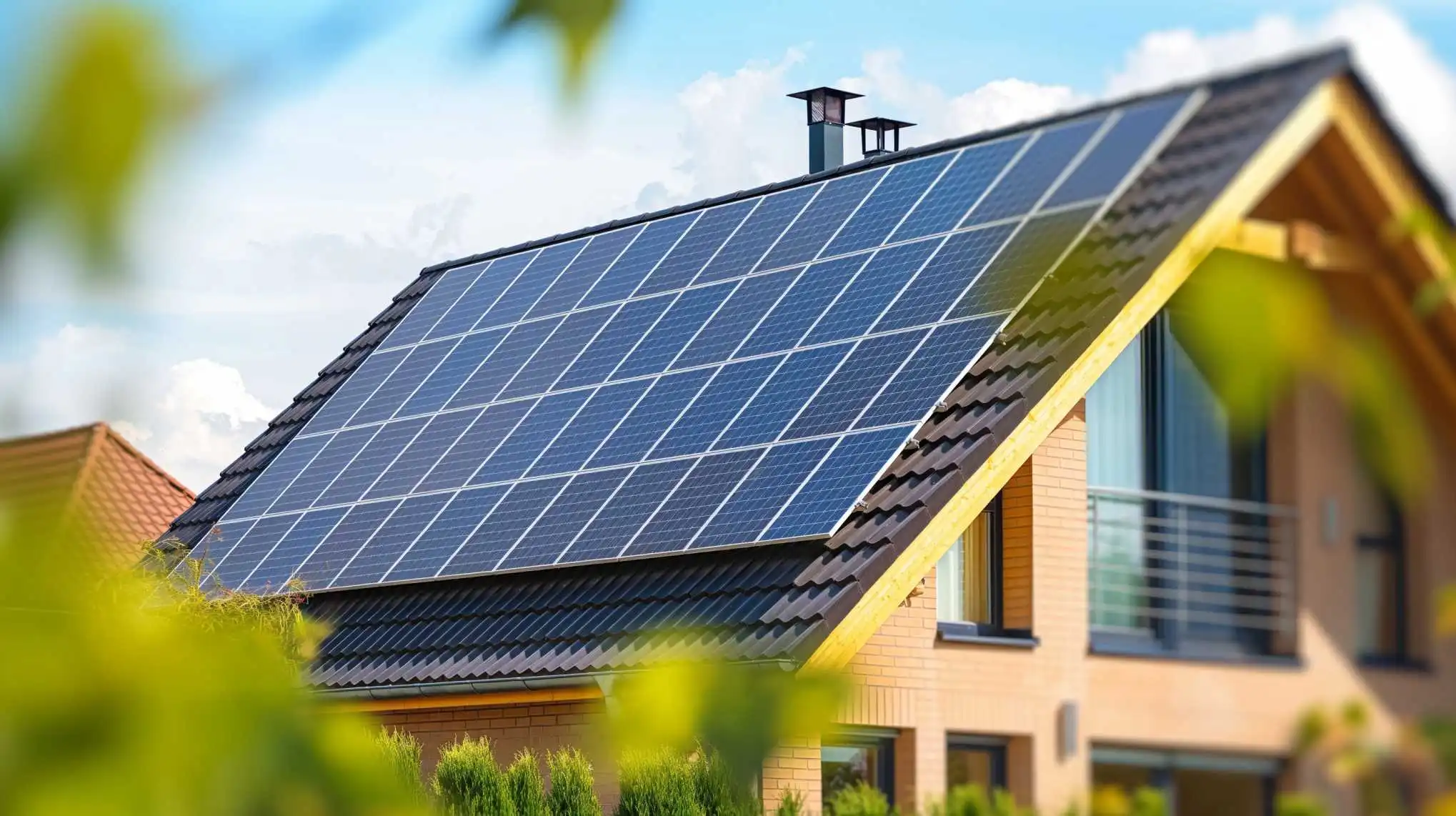
Businesses pay higher tariffs and consume in daylight, which is exactly why commercial solar pays back faster than residential.
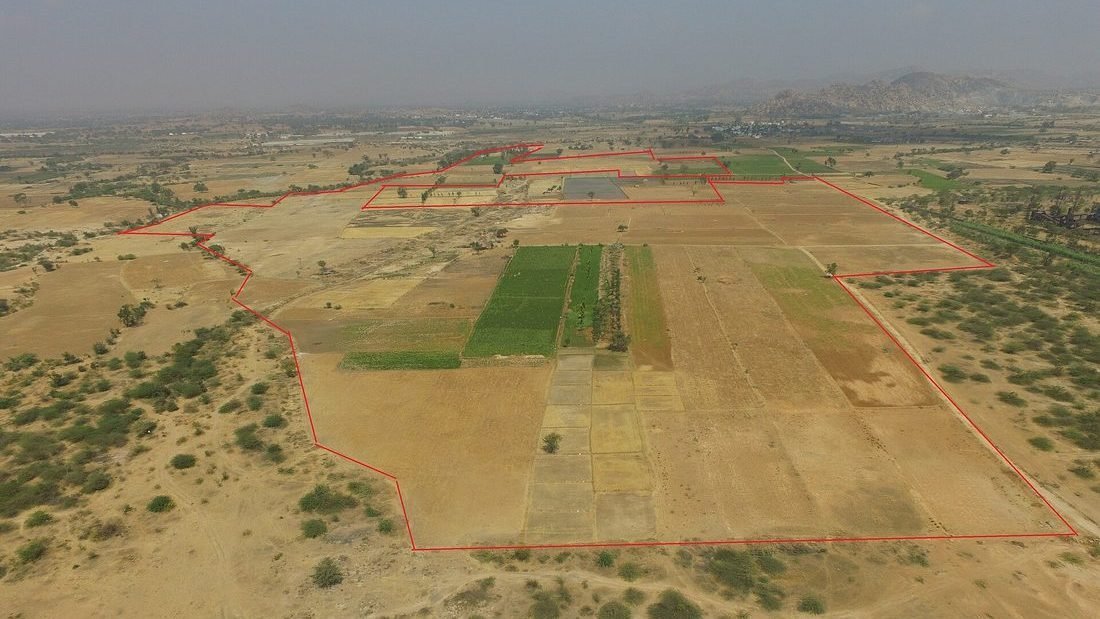
Image: Solar Power Plant Karnataka II in state of Karnataka, India, 27-MWp DCb by Thomas Lloyd Group, CC BY-SA 4.0, via Wikimedia Commons.
A shop in Pandri, a school in Shankar Nagar and a hotel on GE Road have almost nothing in common operationally, but they share one thing: they consume most of their electricity between nine in the morning and six in the evening, at commercial tariffs well above domestic rates.
That is precisely the consumption profile solar is best at serving, which is why commercial solar installation in Raipur generally pays back faster than a home system, even without any subsidy.
Three structural advantages work in a business's favour.
CSPDCL commercial and LT industrial tariffs sit meaningfully above domestic slab rates. Every unit your panels displace is therefore worth more than the same unit displaced at a house, which compresses payback.
A household's biggest consumption is in the evening, when panels have stopped. A showroom, clinic or factory consumes while the sun is up, so a very high share of generation is self-consumed rather than exported. Self-consumed units are worth full retail value; exported units are credited under net metering.
This is the benefit most business owners underuse. Solar assets qualify for 40 per cent depreciation in the first year under the Income Tax Act. For a company in the 30 per cent bracket, a Rs 40 lakh system generates a substantial first-year write-off, on top of the electricity savings. Input GST credit on the installation is recoverable too.
Per-kilowatt cost falls as systems get larger, because design, mobilisation and approval overheads spread across more capacity.
| System Size | Indicative Cost | Roof Area | Annual Generation | Annual Saving |
|---|---|---|---|---|
| 10 kW | Rs 5.0 - 5.8 lakh | 1,000 sq ft | 14,500 units | Rs 1.1 - 1.4 lakh |
| 25 kW | Rs 11 - 14 lakh | 2,500 sq ft | 36,000 units | Rs 2.9 - 3.6 lakh |
| 50 kW | Rs 21 - 26 lakh | 5,000 sq ft | 73,000 units | Rs 5.8 - 7.3 lakh |
| 100 kW | Rs 42 - 50 lakh | 10,000 sq ft | 1,46,000 units | Rs 11.6 - 14.6 lakh |
| 250 kW | Rs 1.0 - 1.2 crore | 25,000 sq ft | 3,65,000 units | Rs 29 - 36 lakh |
Generation assumes Raipur irradiance of roughly 1,460 units per kW per year. Savings assume typical commercial tariffs; your exact figure depends on your sanctioned load and tariff category.
| Business Type | Typical System | Why It Works | Payback |
|---|---|---|---|
| Retail showroom | 10 - 20 kW | Lighting and air conditioning run all day | 4 - 5 years |
| School or college | 25 - 50 kW | Large flat roofs, daytime-only operation | 4 - 5 years |
| Hospital or nursing home | 50 - 100 kW | Round-the-clock load, high tariff | 4 - 5 years |
| Hotel or banquet hall | 50 - 100 kW | Heavy cooling and laundry load | 4 - 5 years |
| Cold storage | 100 - 250 kW | Continuous compressor load | 3.5 - 4.5 years |
| Office building | 15 - 40 kW | Predictable 9-to-6 consumption | 4 - 5 years |
Manufacturing units are a category of their own, covered in our factory solar power plant guide.
Businesses frequently oversize, assuming bigger is better. Under net metering, exported surplus is credited - but commercial net-metering settlement is less generous than self-consumption, and unused credits can lapse at the end of the settlement year.
The efficient design point for most Raipur businesses is a system that covers 70 to 85 per cent of daytime consumption, maximising self-consumption without generating large surpluses you cannot use. That is a load-study decision, which is why we will not quote a commercial system from a photograph of your roof.
Long-term care is covered in our warranty and maintenance guide, and the underlying savings arithmetic in our solar savings guide.
Roughly Rs 45,000 to Rs 55,000 per kW installed for quality equipment, falling per kW as the system grows. A 25 kW rooftop system runs about Rs 11 to 14 lakh, and a 100 kW system about Rs 42 to 50 lakh.
No. PM Surya Ghar is residential only. Businesses instead claim 40 per cent accelerated depreciation in year one under the Income Tax Act, plus input GST credit, which for most firms delivers a comparable benefit.
Typically 4 to 5 years, and closer to 3.5 to 4.5 years for manufacturing units with heavy daytime load. After payback the generation is effectively free for the remaining 20 years of panel life.
Only with a hybrid configuration that includes battery storage or a compatible generator interface. A plain grid-tied system shuts down during an outage for lineman safety, as required by CSPDCL.
No, when installed correctly. We survey the structure first, use non-penetrating ballasted frames on RCC and purlin-clamped rails on metal sheet roofs, and warrant our workmanship including weatherproofing for five years.
Commercial solar is a capital decision, not a utility purchase, and it deserves a proper load study rather than a price per kilowatt. We will model your actual consumption pattern against a system design and show you the payback before you commit to anything.
Visit us at C-29, Sector 3, Devendra Nagar, Raipur, Chhattisgarh 492001, call 083051 31420, or send us your details online. Our team answers every enquiry from Raipur and across Chhattisgarh, usually on the same working day.
Free load study, roof survey and a written proposal with payback maths for your Raipur business.