
0%
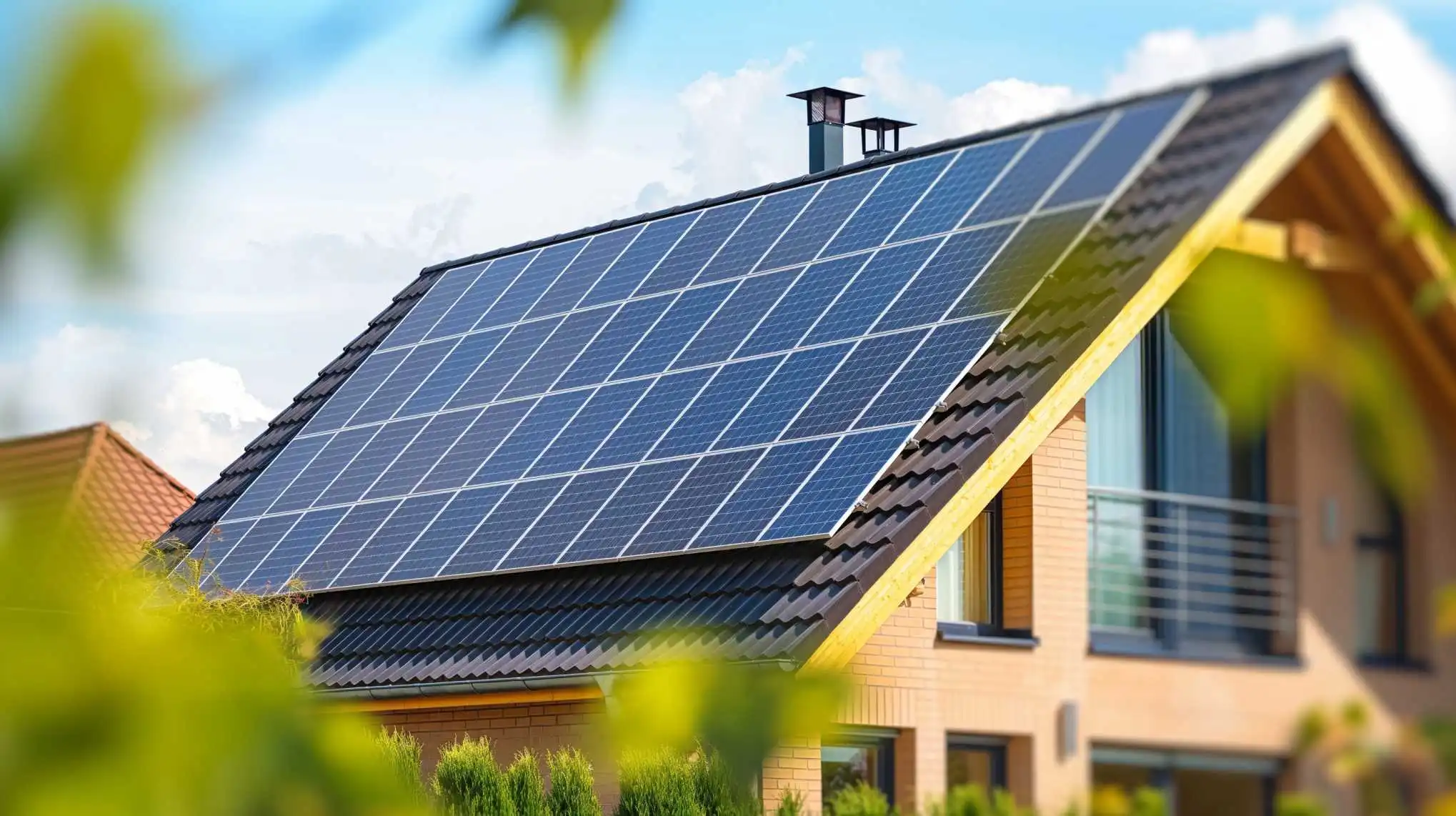
A statewide view of what solar costs, which schemes apply and what works in Raipur, Durg, Bilaspur, Korba and beyond.
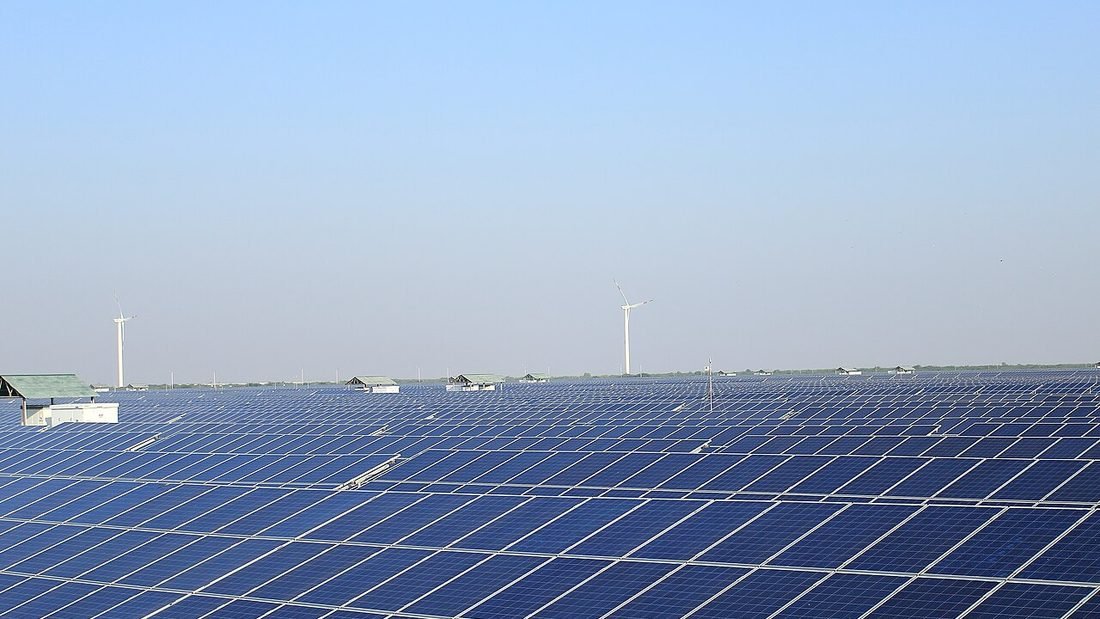
Image: GMR Gujarat Solar Power Ltd by Epagemakerwiki, CC BY-SA 4.0, via Wikimedia Commons.
Chhattisgarh has the sunshine, a fast-growing industrial base and, in 2026, an unusually generous set of subsidies. That is why solar in Chhattisgarh has moved from a niche for early adopters to a mainstream choice for homes, farms and factories. This guide gives a statewide view, then shows what changes by district and customer type.
Quick answer: homes get up to Rs 78,000 central subsidy plus a state top-up, farmers can use PM-KUSUM for pumps, and businesses get accelerated depreciation. Payback runs from about two to four years for homes and three to five for commercial sites.
Three things line up. First, the national scheme is at scale: the government told Parliament in August 2026 that more than 50 lakh households have benefited from PM Surya Ghar, and the ministry has described a record 3.16 lakh installations in one month. Second, Chhattisgarh added its own subsidy in 2025, with targets of 60,000 plants in 2025-26 and 70,000 in 2026-27. Third, GST on solar equipment was cut from 12 per cent to 5 per cent in September 2025, trimming system prices across the board.
| Customer | Main scheme or benefit | Typical payback | Where to read more |
|---|---|---|---|
| Home with CSPDCL connection | PM Surya Ghar central subsidy up to Rs 78,000 plus state top-up | 2 - 4 years | PM Surya Ghar in Chhattisgarh |
| Housing society or RWA | Rs 18,000 per kW for common facilities up to 500 kW | 3 - 5 years | Solar for apartments |
| Farmer | PM-KUSUM solar pump support | 3 - 5 seasons vs diesel | Solar pumps in Chhattisgarh |
| Shop, school, hospital, hotel | 40% accelerated depreciation, net metering | 4 - 5 years | Commercial solar |
| Factory or industry | Captive or open-access solar, depreciation | 3.5 - 4.5 years | Industrial solar EPC |
| Panchayat, campus, society | Solar street lights and common-area power | 3 - 6 years | Solar street lights |
System prices are broadly the same across districts because modules and inverters come from the same suppliers. What changes is logistics, roof type and the cable run. A tier-1 3 kW on-grid system for a home typically costs Rs 1.65 to 1.90 lakh and a 5 kW system Rs 2.6 to 3.0 lakh before subsidy. Commercial systems from 15 to 200 kW carry lower per-kW prices with scale. Our solar savings guide has the full tables.
| District belt | Load profile | What to watch |
|---|---|---|
| Raipur and Dhamtari | Homes, shops, rice mills, farms | Dust in dry March; net-metering demand is high |
| Durg and Bhilai | Steel-town homes, workshops, factories | Industrial feeders, rooftop shade from dense building |
| Bilaspur and Rajnandgaon | Homes, institutions, farms | Longer service distances; pick an installer with a field team |
| Korba and Raigarh | Power and mining belt, industrial and commercial | Heavier dust soiling; more frequent cleaning |
| Bastar and the south | Rural homes, institutions, remote sites | Off-grid and hybrid sometimes make sense; grid reliability varies |
For Korba and Rajnandgaon specifically, see rooftop solar in Korba and Rajnandgaon.
On-grid is the default for any property with a stable CSPDCL supply: cheapest, subsidised and low-maintenance. Hybrid suits feeders with long or frequent outages. Off-grid suits farms and sites the grid does not reach. We compare all three in on-grid vs off-grid vs hybrid.
We expand on these in solar company in Chhattisgarh: how to pick one.
Module availability for subsidised systems has been tight at times in 2026 as domestic-content rules tightened, which can add days to an order (see DCR and ALMM List-II explained). Monsoon wind loads call for a properly designed structure, and lightning calls for correct earthing and surge protection. None of these is a reason to wait, but all of them are reasons to choose your installer on engineering, not price.
For farmers, the key scheme is PM-KUSUM, which supports standalone solar pumps and, in some components, grid-connected pumps and small plants. Support combines central and state shares with a farmer contribution, and the exact percentages vary by component and by year, so confirm the current rates before applying. Typical documents include land records, Aadhaar, a bank passbook and borewell details. Our guides on solar water pumps in Raipur and agricultural solar pumps in Chhattisgarh go deeper on sizing and running costs.
Net metering is handled by CSPDCL, so the process is common across districts, but the speed of feasibility approval and meter supply can vary between division offices. Rural feeders may also have different voltage and reliability characteristics from urban ones, which affects whether an on-grid system or a hybrid makes more sense. Your installer's local experience with your division matters as much as the equipment list.
| Customer | First action | Document to collect |
|---|---|---|
| Homeowner | Book a site survey and compare two written quotes | Last 12 CSPDCL bills |
| Housing society | Pass a general-body resolution | Common-area bills and roof layout |
| Farmer | Check PM-KUSUM eligibility and borewell data | Land records and borewell depth |
| Business owner | Analyse daytime load and tariff | Last 12 bills and sanctioned load |
| Factory | Get a structural and load study | Roof drawings and load profile |
Whichever you are, start from your actual consumption, insist on a written quote with named equipment and keep every document. Solar rewards households and businesses that plan carefully and punishes shortcuts.
Chhattisgarh is unusual in how much of its electricity demand comes from industry, mining and power generation. For homes, that mostly means the grid is better supported than in many states. For businesses, it means high daytime loads that fit solar well, and a strong base of factories in Raipur, Bhilai, Durg and the Korba and Raigarh belts that can host large rooftop plants. Industrial customers should also factor in dust, structural capacity of older sheds and the cost of downtime, all of which an experienced EPC will quantify during a survey.
Away from the cities, solar serves several needs. Pumps are the best-known, but solar street lights, school and health-centre rooftops, community buildings and small off-grid systems for remote hamlets also make sense where grid extension is costly or supply is unreliable. Panchayats and institutions should evaluate lifetime cost, including battery replacement and maintenance, rather than only the upfront price. Our guide to solar street lights shows how to compare options.
First measure consumption. Second, decide the system type. Third, check the subsidy or incentive route that applies. Fourth, compare written quotes. Fifth, plan approvals and timelines. Sixth, set up maintenance. Skipping the first step is the most common reason projects disappoint, because a system sized from guesswork is either too small to matter or too large to pay back.
Prefer to see a local example first? Read our guide to solar in Raipur, the state capital's market, or explore our industrial solar EPC in Chhattisgarh service.
Yes. Most of the state gets around 300 clear days a year and strong irradiance, so a well-installed system produces roughly 1,400 to 1,500 units per kW per year. With central and state subsidies on homes, payback often falls between two and four years.
Homes can claim up to Rs 78,000 under PM Surya Ghar Muft Bijli Yojana plus the state top-up announced in 2025. Farmers can use PM-KUSUM for solar pumps. Businesses benefit from accelerated depreciation. Confirm current slabs before you buy.
You need an installer registered on the PM Surya Ghar portal for your district with a local service team. A company that cannot reach your site within a day or two is a problem in year five, regardless of the brand on the panels.
We serve Raipur, Bhilai-Durg, Bilaspur, Korba, Rajnandgaon and Dhamtari from Raipur and extend to other districts for farm and industrial projects.
Heavier soiling near mining and power-plant belts means panels need more frequent cleaning. Plan a cleaning schedule or maintenance contract rather than relying on monsoon rain alone.
We design and install for homes, farms and factories across the state from our Raipur office at C-29, Sector 3, Devendra Nagar, Raipur, Chhattisgarh 492001. Call 083051 31420 or send your requirement online. See all our solar services in Chhattisgarh.
Site survey, design, installation, subsidy paperwork and after-sales support for rooftop, farm and industrial solar across the state.