
0%

Everything a grid-tied system does, plus power that stays on when the colony goes dark - and an honest look at whether that is worth the extra cost.
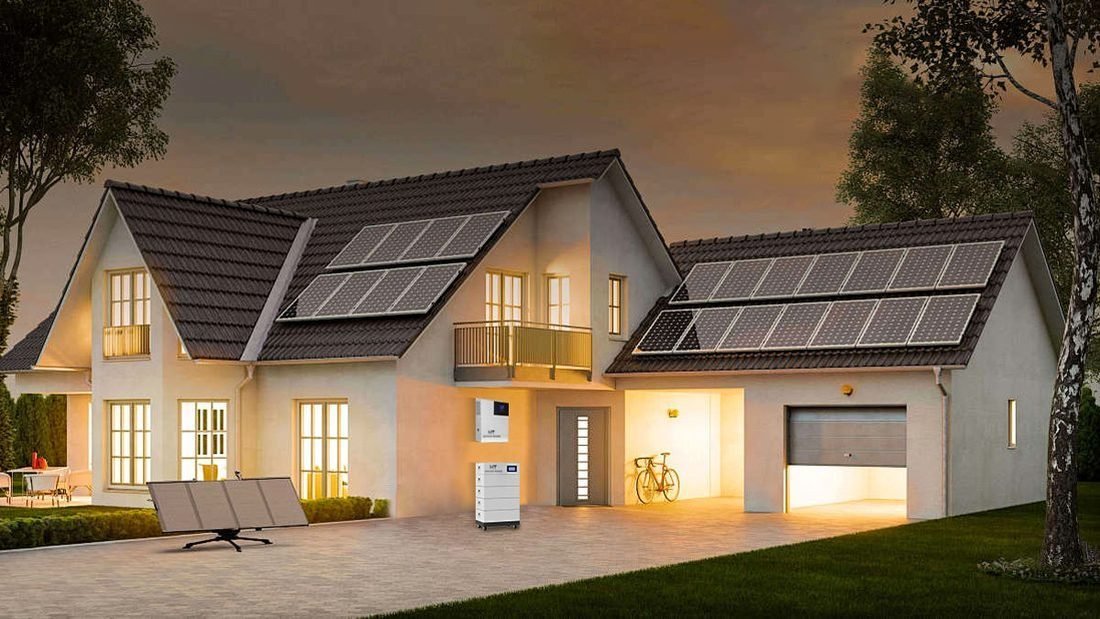
Image: Household solar energy storage system by Yan lance, CC0, via Wikimedia Commons.
Raipur's grid is a good deal better than it was a decade ago, but anyone living in the outer colonies, or through a bad pre-monsoon storm week, knows the supply still drops. That is the itch a hybrid solar system for home in Raipur scratches.
This guide explains what a hybrid actually is, what batteries cost and how long they last in Chhattisgarh's heat, and - the part most sales pitches skip - when you genuinely do not need one.
Three configurations exist, and the names get used loosely.
A hybrid is not a bigger solar system. It is the same generation with storage bolted on, so it does not save you more on your bill - it changes what happens when the power fails. That distinction matters, because the savings maths in our solar savings guide is broadly the same for both.
| Configuration | Storage | Indicative Cost | Backup Duration (essentials) |
|---|---|---|---|
| 3 kW hybrid | 5 kWh lithium | Rs 2.8 - 3.6 lakh | 5 - 6 hours |
| 5 kW hybrid | 10 kWh lithium | Rs 4.2 - 5.5 lakh | 10 - 12 hours |
| 5 kW hybrid | 10 kWh lead-acid | Rs 3.4 - 4.2 lakh | 5 - 6 hours usable |
| 8 kW hybrid | 15 kWh lithium | Rs 6.5 - 8.0 lakh | 14 - 16 hours |
| 10 kW hybrid | 20 kWh lithium | Rs 8.5 - 10.5 lakh | Full home, overnight |
Compare the 5 kW hybrid at Rs 4.2 to 5.5 lakh against a 5 kW grid-tied system at Rs 2.6 to 3.0 lakh. You are paying roughly Rs 1.5 to 2.5 lakh for backup capability. Whether that is worth it is a question about your feeder, not about solar.
Do not start from a battery size. Start from what you actually need running during an outage.
| Appliance | Typical Draw | Consumption Over 4 Hours |
|---|---|---|
| LED lights (8 points) | 80 W | 0.32 kWh |
| Ceiling fans (4) | 240 W | 0.96 kWh |
| Refrigerator | 150 W average | 0.60 kWh |
| Television and Wi-Fi | 120 W | 0.48 kWh |
| Essentials subtotal | 590 W | 2.36 kWh |
| 1.5 ton inverter AC | 1,100 W | 4.40 kWh |
| Water pump (1 HP, 20 min) | 750 W | 0.25 kWh |
Essentials for a typical Raipur family come to roughly 600 W. A 10 kWh lithium battery at 90 per cent usable depth gives about 9 kWh, comfortably covering an overnight outage. Add air conditioning and the same battery empties in two to three hours - which is why we ask customers to decide honestly whether the AC really needs to be on the backed-up circuit.
This matters more here than in cooler states. Battery life is temperature-sensitive, and a Raipur summer is punishing.
| Factor | Lithium (LFP) | Lead-Acid (Tubular) |
|---|---|---|
| Usable depth of discharge | 90% | 50% |
| Expected life | 10 - 15 years | 3 - 5 years |
| Maintenance | None | Quarterly electrolyte checks |
| Heat tolerance | Good, with ventilation | Poor - life drops sharply |
| Upfront cost per kWh | Higher | Lower |
| Cost per usable kWh over life | Lower | Higher |
| Footprint and weight | Compact | Bulky |
Lead-acid looks cheaper on day one and is usually more expensive by year six, because you will have replaced the bank at least once. Either way, keep the battery out of direct afternoon sun and in a ventilated space - this is the single biggest thing you control.
We talk customers out of hybrids regularly. A plain grid-tied system is the better buy if:
Go hybrid when outages are frequent or long on your feeder, when you work from home, when there is medical equipment in the house, or when you run a shop where downtime costs money.
A hybrid takes about a day longer than the 3-to-5-day grid-tied timeline in our installation timeline guide, because of two extra jobs: mounting and ventilating the battery, and splitting your distribution board so backed-up circuits sit on a separate bus.
That second step matters. The backed-up circuits are the ones that stay live during an outage; everything else goes dark. Decide which circuits those are before installation day, because changing it afterwards means rewiring the board.
A 5 kW hybrid with around 10 kWh of lithium storage typically costs Rs 4.2 to Rs 5.5 lakh before subsidy, against roughly Rs 2.6 to Rs 3.0 lakh for the same capacity grid-tied. The battery is essentially the whole difference.
The solar generation portion can qualify if the system is net-metered and installed by an empanelled vendor, but the battery portion is not subsidised. The subsidy is capped at Rs 78,000 regardless.
A 10 kWh battery running essential loads - lights, fans, refrigerator, television and Wi-Fi, roughly 800 W - lasts around 10 to 12 hours. Add an air conditioner and that falls to two or three hours.
Lithium, in almost every case. It costs more upfront but lasts 10 to 15 years against 3 to 5 for lead-acid, needs no maintenance, tolerates Raipur's heat better and gives usable depth of discharge of 90 per cent against 50 per cent.
Sometimes. If your inverter is hybrid-ready you can add storage later. A plain grid-tied string inverter usually cannot be retrofitted, so you would need either an inverter replacement or a separate AC-coupled battery unit.
A hybrid system is the right answer for some Raipur homes and an expensive luxury for others. The deciding factor is not how much you dislike power cuts but how often they actually happen on your feeder and what you genuinely need running through them.
Visit us at C-29, Sector 3, Devendra Nagar, Raipur, Chhattisgarh 492001, call 083051 31420, or send us your details online. Our team answers every enquiry from Raipur and across Chhattisgarh, usually on the same working day.
Tell us how often your supply fails and what you need running during a cut. We will size it honestly - including telling you if a plain grid-tied system is enough.