
0%

What going solar in Raipur costs today, what it saves every month and how the subsidies change the maths.
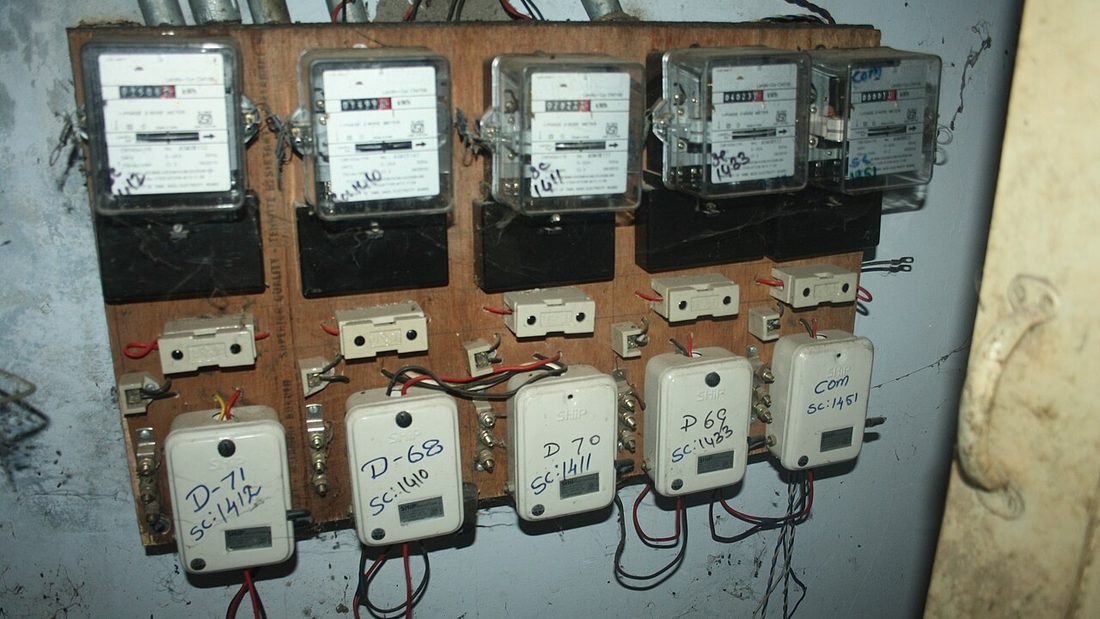
Image: Electricity meters in India by Balaji Kasirajan, CC BY-SA 3.0, via Wikimedia Commons.
If you have been wondering whether solar in Raipur is a sound investment or just an agent's pitch, this guide puts the real numbers in one place: cost by system size, monthly savings, payback, subsidies, tax on equipment and the steps in order. It is written for a home owner with a CSPDCL connection and a roof, and it uses the same figures our engineers use when they quote.
Quick answer: a 3 kW rooftop system costs about Rs 1.65 to 1.90 lakh, qualifies for Rs 78,000 central subsidy (plus a reported state top-up), saves Rs 2,400 to 3,000 a month and pays for itself in about three to four years. It then runs for 25 years.
Raipur sits at roughly 21 degrees north with about 300 clear days a year and daily irradiance of 5.0 to 5.5 kWh per square metre. One kilowatt of capacity produces around 4.0 to 4.5 units per day, or about 1,500 units a year. Output peaks in March, April and October, dips in July and August under monsoon cloud and holds up well through the winter because panels are more efficient in cool air.
| System size | Indicative cost (tier-1, before subsidy) | Central subsidy | Net cost | Suits a monthly bill of |
|---|---|---|---|---|
| 1 kW | Rs 60,000 - 70,000 | Rs 30,000 | Rs 30,000 - 40,000 | Rs 700 - 1,000 |
| 2 kW | Rs 1.2 - 1.4 lakh | Rs 60,000 | Rs 60,000 - 80,000 | Rs 1,500 - 2,200 |
| 3 kW | Rs 1.65 - 1.90 lakh | Rs 78,000 | Rs 87,000 - 1.12 lakh | Rs 2,500 - 3,500 |
| 5 kW | Rs 2.6 - 3.0 lakh | Rs 78,000 | Rs 1.8 - 2.2 lakh | Rs 4,000 - 5,500 |
| 10 kW | Rs 5.0 - 5.8 lakh | None (above 3 kW) | Rs 5.0 - 5.8 lakh | Rs 8,000 - 11,000 |
Prices depend on module and inverter tier, the roof type and structure height, and the cable run. The GST cut on solar equipment from 12 per cent to 5 per cent in the September 2025 rationalisation lowered costs across the industry. The full arithmetic for a 3 kW home is in our 3 kW solar system price guide.
| System size | Monthly generation | Monthly saving | Annual saving |
|---|---|---|---|
| 2 kW | 240 - 270 units | Rs 1,600 - 2,000 | Rs 19,000 - 24,000 |
| 3 kW | 360 - 400 units | Rs 2,400 - 3,000 | Rs 29,000 - 36,000 |
| 5 kW | 600 - 675 units | Rs 4,000 - 5,000 | Rs 48,000 - 60,000 |
These figures assume CSPDCL domestic tariffs with net metering in place. Without net metering, exported daytime surplus earns nothing and the savings drop sharply, which is why we file that application for every customer.
Full detail is in PM Surya Ghar Yojana in Chhattisgarh, and the online steps are in solar subsidy apply online in Chhattisgarh. Our own PM Surya Ghar Yojana in Raipur page lists the subsidy slabs.
Most Raipur homes are best served by a plain on-grid system: cheapest, subsidised and maintenance-light. It shuts down during a power cut for lineman safety. If outages are frequent on your feeder, a hybrid with battery adds backup at a premium of roughly Rs 1.5 to 2.5 lakh, which we compare in on-grid vs off-grid vs hybrid and solar battery storage for home in Raipur.
Commercial and industrial customers in Raipur pay higher tariffs and use most of their power by day, so paybacks are often shorter, helped by accelerated depreciation. See commercial solar installation in Raipur and solar power plant for a factory in Raipur. Farmers around Abhanpur, Arang and Tilda should read about solar water pumps.
Output is not flat. Spring and the post-monsoon weeks deliver the highest daily generation, the monsoon months of July and August deliver the least and winter performs better than most people expect because panels run more efficiently in cool air. That is why a yearly average is the right figure to judge a system on.
| Season | Typical effect on generation | What to do |
|---|---|---|
| March - June | Strong sun; dust builds up quickly | Clean panels every few weeks |
| July - September | Cloud cover reduces output; rain cleans panels | Check for shade from new growth; inspect after storms |
| October - November | Excellent conditions after the rains | Peak month for net-metering credits |
| December - February | Cool, clear days; panels efficient | Mornings are slightly shorter; check for fog days |
Take a family in Raipur paying about Rs 3,000 a month and using roughly 380 units. A 3 kW system generates about 360 to 400 units a month on average, so it covers nearly the whole consumption. A household using 600 units a month needs closer to 5 kW. A household using 150 units needs 1 to 2 kW. Size from twelve months of bills, because summer air conditioning and winter geyser use can double or halve the figure, and net metering lets you bank surplus from low-consumption months.
Your bidirectional meter records units drawn from CSPDCL and units exported. At the end of the billing cycle, exported units offset imported ones and you pay for the net. Surplus beyond what you consumed is carried forward under the applicable rules, which can change, so confirm the current settlement terms. Our CSPDCL net metering guide covers the process step by step.
Ready to start? See what we do as a solar company in Raipur, or read how our rooftop solar installation team works.
A quality tier-1 3 kW on-grid system typically costs Rs 1.65 to 1.90 lakh before subsidy. A 2 kW system runs about Rs 1.2 to 1.4 lakh and a 5 kW system Rs 2.6 to 3.0 lakh. After the central subsidy of Rs 78,000, a 3 kW home system nets out to roughly Rs 87,000 to 1.12 lakh.
A correctly sized 3 kW system generates about 360 to 400 units a month and saves roughly Rs 2,400 to 3,000 a month on a typical CSPDCL bill. Most households see their bills fall by 70 to 90 per cent.
Yes. Raipur receives roughly 5.0 to 5.5 kWh per square metre per day across about 300 clear days a year. One kilowatt of well-installed capacity produces around 1,500 units a year, more than the same system would in Delhi or Kolkata.
About three to four years after the central subsidy, and shorter if the Chhattisgarh state top-up applies to your connection. The system then keeps generating for 25 years with routine cleaning.
Gather twelve months of CSPDCL bills, check that your roof has shadow-free space and ask a registered installer for a site survey and written quotation. Registration on the PM Surya Ghar portal can follow once you have chosen a vendor.
Send us your last twelve CSPDCL bills and we will return a written design, a net cost after subsidy and a month-by-month generation estimate. Visit C-29, Sector 3, Devendra Nagar, Raipur, Chhattisgarh 492001, call 083051 31420 or book a free survey. Learn more about us as a solar company in Raipur.
Free site survey, bill analysis and a written quotation with subsidy worked out, from Gupta Agro Solar in Devendra Nagar.