
0%
The module rules behind the PM Surya Ghar subsidy keep changing. Here is what they mean for your quote, your delivery date and your subsidy.
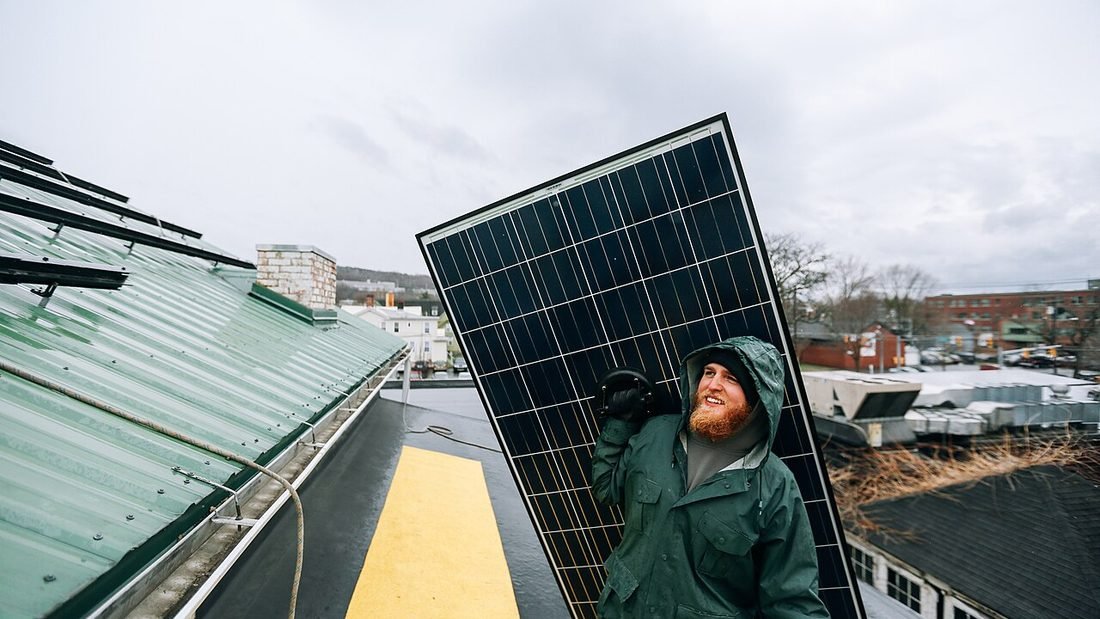
Image: Technician working on a solar panel installation (9232) by Stephen Yang / The Solutions Project, CC BY 2.0, via Wikimedia Commons.
If your rooftop solar quote mentions DCR, ALMM or "List-II", you are looking at the module rules that decide whether your subsidy is paid. They have changed through 2026, sources disagree on the details and installers explain them differently. This guide reduces it to what a Raipur home owner needs to know, with the places where you should verify rather than trust.
Quick answer: for a subsidised rooftop solar installation in Raipur, use modules that meet the scheme's domestic content rules, ask for the manufacturer's DCR documentation before you pay and confirm the current rule with your installer on the day of your order. Rules and exemptions are updated by MNRE, so treat this article as a map, not a legal opinion.
DCR means Domestic Content Requirement. The PM Surya Ghar central subsidy is available only when the system uses DCR solar modules, which are made in India with domestically manufactured cells. A module assembled in India from imported cells is a non-DCR module. It can be perfectly good hardware, but it does not qualify for the subsidy.
| List | What it covers | Where things stand (as reported) |
|---|---|---|
| ALMM List-I | Solar modules: approved models and manufacturers | Continues to apply. MNRE has reiterated that List-I requirements remain in force. |
| ALMM List-II | Solar cells: approved cell manufacturers | Set to come into operation from 1 June 2026. Exemptions and extensions for particular project categories have been reported since, with differing deadlines across sources. |
Trade press reported in October 2026 that MNRE added 529 MW of Mono-PERC cell capacity to List-II, taking enlisted capacity to 37,393 MW. More listed cell capacity means more compliant modules over time, but in the short run it has not always matched demand.
| Factor | DCR modules | Non-DCR modules |
|---|---|---|
| PM Surya Ghar central subsidy | Eligible | Not eligible on a subsidised system |
| Cell origin | Made in India | Imported cells |
| Price per watt | Usually higher; varies by supplier and month | Usually lower |
| Availability in 2026 | Tight at times, can add delivery days | Generally easier to source |
| Performance warranty | Typically 25 years linear | Typically 25 years linear |
| Best for | Homes and housing societies claiming subsidy | Customers who forgo the subsidy, or projects outside the scheme |
The headline: for a home claiming Rs 78,000, DCR is not optional. For a customer who is not claiming the subsidy, MNRE has issued clarifications on exemptions, but sources report the dates and scope differently, so ask your installer to show you the current office memorandum rather than rely on a verbal assurance.
Domestic cell capacity has been ramping up faster than most years, but rooftop demand has been faster still. Industry coverage in 2026 has reported a DCR module shortage that pushed back some rooftop timelines and has also noted that module makers without listed cell capacity face constraints. For you, that can mean a delivery date that slips by a few days to a few weeks. A reliable installer will tell you the real date at the time of booking and will not promise a three-day install if the modules are not in the warehouse.
At inspection and when the subsidy is processed, the portal data needs to match what is on your roof. Keep the delivery challan, the invoice, the DCR certificate, the module serial numbers and the commissioning report together. They are your insurance if anything is questioned later. Our online application walkthrough shows where each document is used, and our guide to the PM Surya Ghar Yojana in Chhattisgarh covers the amounts.
The broad direction is a gradual shift towards domestically manufactured cells. The cell-level list was scheduled to apply from 1 June 2026, trade reports then described exemptions and extensions for particular project categories, and MNRE has kept adding enlisted cell capacity. Different sources give different deadlines, and the rules are published in office memoranda that can be updated. The practical lesson is to check the current position at the time you place your order rather than rely on an older article, including this one.
| Customer | Likely position | What to do |
|---|---|---|
| Home claiming PM Surya Ghar subsidy | DCR modules are needed for the subsidy | Get DCR documentation in writing before you pay |
| Home not claiming the subsidy | Rules and exemptions are more nuanced | Ask the installer to show the current MNRE memorandum |
| Housing society claiming the RWA subsidy | Same module rules apply to the subsidised capacity | Confirm module compliance in the proposal |
| Commercial or industrial user | Net-metering projects may face module and cell rules | Ask your EPC to confirm which list applies |
If compliant modules are tight, two things help. Book early and ask your installer to confirm the delivery date in writing. Stagger the portal steps so that feasibility approval runs while stock is arranged, rather than waiting. If the date slips, ask whether the price is fixed and who bears any cost change. A transparent installer will explain delays rather than hide them.
Keep digital copies as well as paper. If an officer questions anything, you can answer on the spot instead of waiting for the installer to dig up documents.
Modules supplied under the scheme commonly use mono-crystalline cells in PERC or TOPCon designs. TOPCon modules often offer slightly higher efficiency and a lower temperature coefficient, which helps in hot Raipur summers, but real-world gains depend on the specific product. Compare the datasheet figures for power tolerance, degradation in the first year and annual degradation, and make sure the warranty is issued by the manufacturer you are told about.
For every subsidised installation, we confirm the module make and model with the supplier before booking, collect the compliance documents for the batch and record serial numbers at delivery. We tell customers the realistic delivery date upfront, and we keep a copy of every document in the project file so the portal data, the invoice and the roof always agree. That discipline matters more than any single rule, because rules change while a mismatch between paperwork and equipment is what actually delays a subsidy.
If you are comparing quotes, ask each installer to describe its own process for module verification. The quality of the answer tells you a lot about how the rest of the project will go.
If you want the module question answered for your own roof, see our solar panel installation service, or compare installers with our guide to choosing a solar company in Chhattisgarh.
DCR stands for Domestic Content Requirement. A DCR module is made in India with domestically manufactured solar cells. Under PM Surya Ghar, subsidised rooftop systems must use DCR modules.
No. Non-DCR modules do not qualify for the central subsidy on a subsidised system. Specific exemptions have been announced for certain categories, so check the current guidelines on the portal and ask your installer to confirm in writing.
ALMM is the Approved List of Models and Manufacturers maintained by MNRE. List-I covers solar modules and List-II covers solar cells. The cell list took effect from 1 June 2026, with exemptions and extensions for some project categories reported since.
Domestic cell capacity has not yet matched demand, and trade press has reported DCR module shortages disrupting rooftop timelines in 2026. Supply is being expanded as MNRE adds more cell capacity to the approved list.
Ask for the module make, model and wattage in writing, the manufacturer's DCR certificate and the serial numbers on delivery. Verify the manufacturer on the MNRE ALMM list and keep the documents with your commissioning report.
We name the module manufacturer, model and compliance documents in every quotation so there are no surprises at inspection. Visit C-29, Sector 3, Devendra Nagar, Raipur, Chhattisgarh 492001, call 083051 31420 or request a quote. Read our checklist for the best solar installer in Raipur for the other nine questions to ask.
Named modules, DCR documentation and CSPDCL paperwork in one written quotation from a PM Surya Ghar registered vendor in Raipur.