
0%
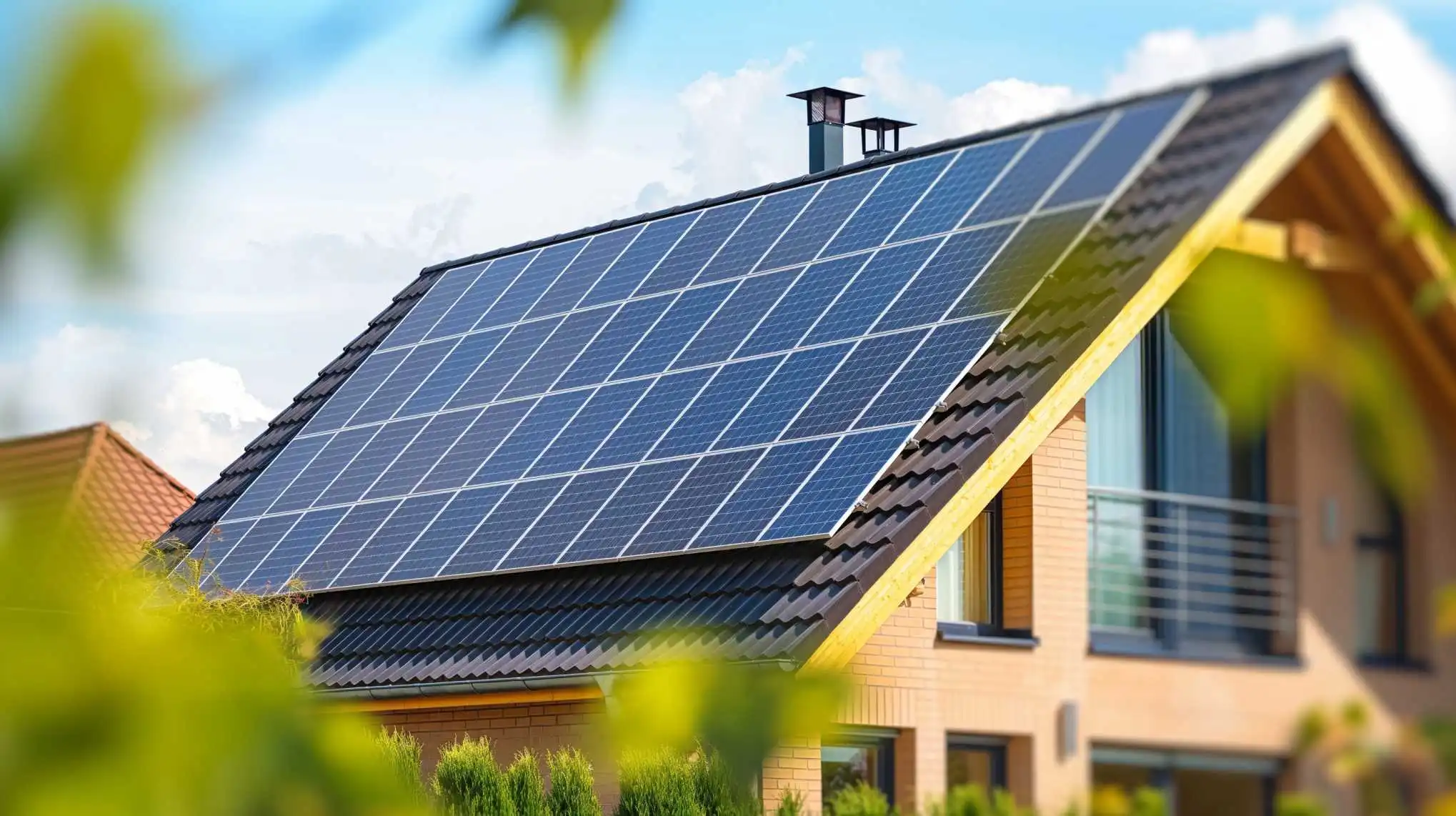
What drives the price, which roof needs which structure and how to build for Chhattisgarh's monsoon winds and lightning.
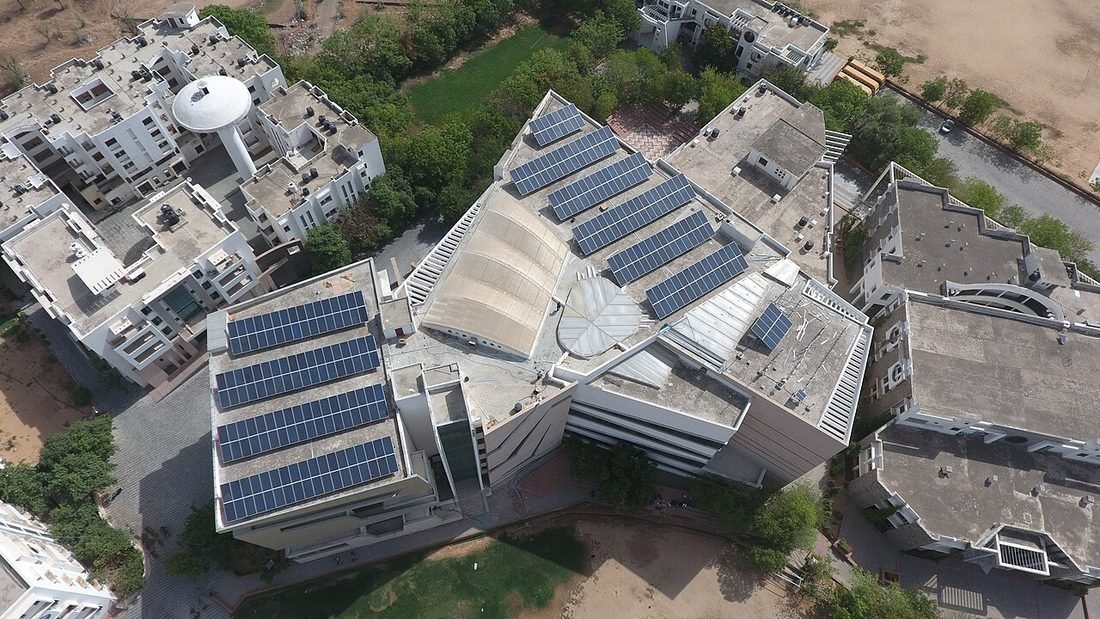
Image: SolarCellsSGVU by Jaipursharma, CC BY-SA 4.0, via Wikimedia Commons.
A rooftop system is a small power plant bolted to a building that has to survive twenty-five Chhattisgarh monsoons. That is why rooftop solar installation in Chhattisgarh is as much an engineering question as a financial one. Two quotes with the same kilowatt number can differ by Rs 40,000 for reasons you can only see on the roof. This guide shows where the money goes and what to insist on.
Quick answer: budget Rs 1.65 to 1.90 lakh for a 3 kW home system, claim up to Rs 78,000 central subsidy (plus the state top-up where it applies), allow three to five days on site and insist on a galvanised structure, proper earthing and a written workmanship warranty.
| System | Indicative cost before subsidy | Central subsidy | Approx. roof area | Monthly generation |
|---|---|---|---|---|
| 2 kW | Rs 1.2 - 1.4 lakh | Rs 60,000 | 20 sq m | 240 - 270 units |
| 3 kW | Rs 1.65 - 1.90 lakh | Rs 78,000 | 30 sq m | 360 - 400 units |
| 5 kW | Rs 2.6 - 3.0 lakh | Rs 78,000 | 50 sq m | 600 - 675 units |
| 10 kW | Rs 5.0 - 5.8 lakh | None above 3 kW | 100 sq m | 1,200 - 1,350 units |
| Roof type | Common in | Mounting method | Watch for |
|---|---|---|---|
| RCC flat roof | Most urban homes in Raipur, Durg, Bilaspur | Raised galvanised structure on concrete foundations or chemical anchors | Waterproofing around foundations, shade from water tanks |
| GI or metal sheet | Warehouses, factories, sheds | Clamp or rail mounts fixed to purlins | Roof age, load capacity, leak points |
| Tiled or sloped roof | Older homes, rural houses | Hook mounts fixed to rafters | Broken tiles, rafter strength |
| Ground or carport | Farms, large plots, institutions | Ground-mounted frame or carport structure | Land availability, shade-free orientation |
The three local stresses are wind, lightning and dust, and each has a specific answer.
Wind. Pre-monsoon squalls can load a panel array like a sail. The structure must be designed for the wind load of the site, with fasteners sized and torqued properly. Thin sections and light galvanising look the same on day one and are decisive in the first storm.
Lightning. Chhattisgarh sees a lot of it. Good practice is separate earthing for the array frame, the inverter and any lightning arrester, with surge protection on the DC and AC sides. Earthing is the line item most often cut from low-priced quotes.
Dust. Dust cuts output 15 to 25 per cent if the panels are never cleaned. Design for safe cleaning access and plan for a regular routine, described in our solar panel cleaning guide.
A fuller day-by-day timeline is in our installation time guide, and the metering side is in CSPDCL net metering.
For homes, the central subsidy is up to Rs 78,000 for 3 kW and above, and Chhattisgarh announced a state top-up in 2025 reported at up to Rs 30,000. Collateral-free loans for systems up to 3 kW are available through participating banks. The full explanation is in PM Surya Ghar Yojana in Chhattisgarh.
On an RCC roof the structure usually stands on concrete foundation blocks or is fixed with chemical anchors. Both can work. What matters is that the structure is hot-dip galvanised, the fasteners are sized for the wind load and the foundations are properly sealed so they do not become leak points. Ask your installer how many foundation points each array has, what tilt angle they are using and how high the lowest edge sits above the roof for cleaning and monsoon water flow. A raised structure costs more steel but protects the roof surface and makes maintenance safer.
Any fixing into the roof creates a potential leak path. A good installer seals each foundation or anchor point, applies waterproofing around it and checks again after the first heavy rain. Ask whether this is included in the quote and whether the workmanship warranty covers roof leaks caused by the installation.
Most inverters connect to a phone app that shows daily generation. In Raipur, expect around 4 to 4.5 units per installed kW on a good day in the dry season, lower on overcast days and lower again if dust has built up. A sudden fall on a sunny day, with no obvious shade, is the signal to call for service. Learn what a normal day looks like in the first month and use that as your baseline.
| Component | Typical warranty or life | Notes |
|---|---|---|
| Solar modules | 25-year performance warranty | Linear output guarantee; confirm the terms in the datasheet |
| Inverter | Commonly 5 - 10 years | Most likely component to need attention |
| Mounting structure | Life of the system if galvanised properly | Check galvanising specification |
| Workmanship | Set by the installer; ask for years in writing | Covers mounting, cabling and earthing |
A routine as simple as a gentle wash with clean water every few weeks in the dry season, a quick visual check of cables and a yearly inspection by a technician keeps output close to design. Avoid abrasive tools and never clean hot panels in direct afternoon sun. For details, see our panel cleaning guide and maintenance and AMC service.
Roof area, budget and consumption all pull in different directions. A useful rule is to size to your annual consumption, not to the roof. If your roof can hold 6 kW but your bills justify 3 kW, the extra capacity earns little and the central subsidy stops at 3 kW. If your consumption is likely to grow because of a new air conditioner, an electric vehicle or a home extension, add some headroom now, because adding capacity later means new paperwork. Ask your installer to show both options with net cost, annual saving and payback side by side.
A good crew arrives with a plan, protects the roof surface, marks layouts before drilling, uses torque tools on structure bolts and tests insulation resistance before connecting the inverter. You should see the supervisor check polarity, record earth resistance and take photographs for the commissioning report. If the crew is improvising or leaving cable loose, speak up. Quality is much cheaper to fix on day two than in year five.
For a city-level view, see rooftop solar installation in Raipur. For the state-level picture, read solar in Chhattisgarh.
A quality 3 kW system costs about Rs 1.65 to 1.90 lakh and a 5 kW system Rs 2.6 to 3.0 lakh before subsidy. Roof type, structure height and cable length move the price within those bands.
Yes, with the right mounting. Sheet roofs use clamp or rail systems fixed to purlins, and tiled roofs use hook mounts. The roof must be sound and the structure designed for the load.
About three to five days on site for a home after approvals, then a further wait for the CSPDCL net meter and inspection. Hybrid systems take about a day longer.
A properly designed system will. That means hot-dip galvanised structure sized for local wind loads, secure foundations or fasteners, correct earthing and surge protection.
For a net-metered connection you need CSPDCL feasibility approval, and for a subsidised system you need to apply on the PM Surya Ghar portal. Apartment residents also need society approval.
A survey is where the price stops being a guess. Visit C-29, Sector 3, Devendra Nagar, Raipur, Chhattisgarh 492001, call 083051 31420 or request a survey online. Our rooftop solar installation service covers Raipur, Bhilai, Durg and Bilaspur.
Free survey, shading analysis, structure design for your roof type and a written quotation with the subsidy worked out.