
0%

Ten verifiable checks that separate a reliable installer from a risky one, written for homeowners comparing quotes in Raipur.
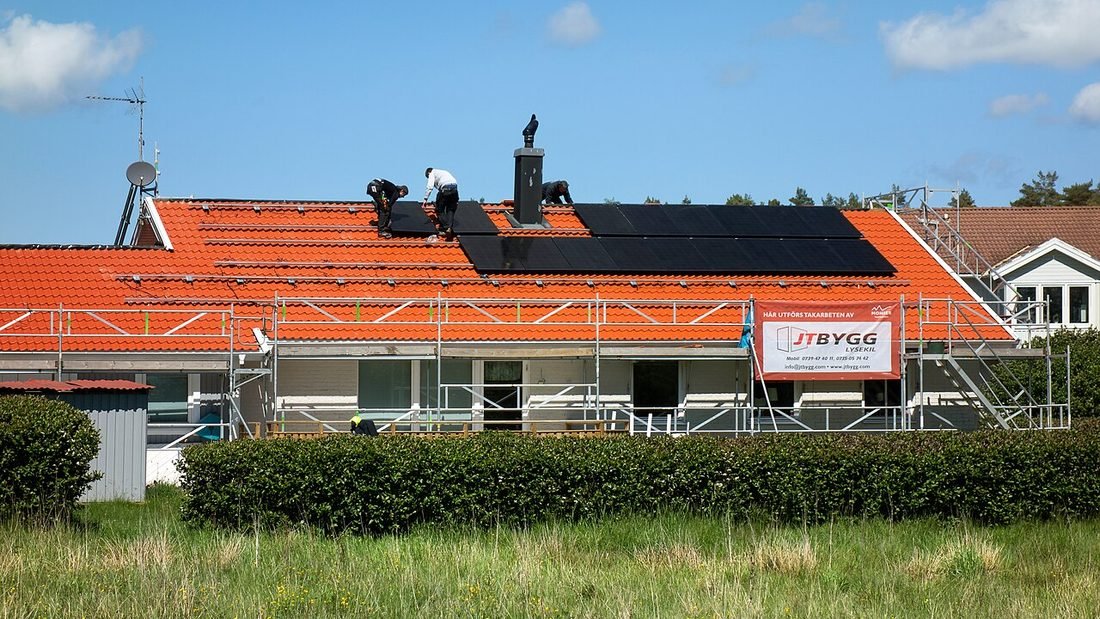
Image: Three men installing solar panels on a house by W.carter, CC0, via Wikimedia Commons.
Every installer in the city claims to be the best solar installer in Raipur. The claim is cheap, so it tells you nothing. What does tell you something is whether the installer can pass ten checks you can verify yourself, none of which depend on a salesperson's word. This checklist is the one we would use if we were buying for our own roof.
Quick answer: choose an installer that is registered on the PM Surya Ghar portal for your district, names every component in writing, offers a workmanship warranty in years, files all CSPDCL paperwork, uses its own trained crew and still answers the phone in year eight. Price is the tenth check, not the first.
For a home system this is decisive. The central subsidy of up to Rs 78,000 is processed only for systems installed by a registered vendor. A non-registered installer offering a Rs 25,000 discount is costing you Rs 53,000 net. Verify registration on the portal's vendor list rather than trusting a certificate scan. If your installer handles PM Surya Ghar Yojana in Raipur applications every week, they will know the process cold.
"Premium Tier-1 panels" is a description. "540 Wp mono modules from a named manufacturer, with model number and DCR certificate" is a specification. A serious quotation names panel and inverter make and model, mounting structure thickness and galvanising, DC and AC cable sizes, earthing and surge protection and the expected annual generation in units. Anything vaguer cannot be compared with anything else.
Subsidised systems must use modules that meet the scheme's domestic content rules, and the compliance requirements have been tightening through 2026. Ask which modules will be supplied, where the cells are made and whether the installer will state it in writing. Our explainer on DCR modules and ALMM List-II sets out what to ask.
Every installer quotes a "25-year warranty". That is the module manufacturer's performance warranty and it is identical whoever fits the panels. What differs is the installer's own workmanship warranty covering structure, cabling, earthing and weatherproofing. Ask for the years in writing, and read our warranty and maintenance guide to see how the three warranties interact.
Portal registration, CSPDCL feasibility, installation data upload, net-meter follow-up, inspection coordination, commissioning certificate and subsidy claim: that is eight touchpoints. If the installer expects you to handle them, expect months of delay. The sequence is in our CSPDCL net metering guide.
A quote issued over the phone is a guess. A real survey measures shadow-free area, maps shading across the day, checks the roof's load-bearing and waterproofing, inspects the meter board and sanctioned load, and reads twelve months of bills. The system is then sized to consumption, not to your roof or the salesperson's target.
Ask whether the people on your roof are employees. Installation quality is mostly a crew quality question, and subcontracted day-rate crews have no stake in your warranty. Ask who supervises the work and whether earthing is tested and documented at commissioning.
Ask for addresses of completed installations in your part of Raipur and visit one. Ask how long the company has traded in Chhattisgarh and whether the office address on the quote is a real, staffed premises. A 25-year panel warranty from a company three years old is a document, not a guarantee.
Raipur's dust and a dry March can cut output 15 to 20 per cent, so cleaning matters. Ask whether an annual maintenance contract is offered, what it covers and what the response time is when a system stops generating. Our panel cleaning guide shows what a proper routine looks like.
Only after the first nine checks should price matter. A fair range for a 3 kW tier-1 system is Rs 1.65 to 1.90 lakh before subsidy, as set out in our solar savings guide. Below that, ask what is missing. Above it, ask what you are getting in return.
| What to compare | Installer A | Installer B | Why it matters |
|---|---|---|---|
| Registered on PM Surya Ghar portal | Yes / No | Yes / No | Decides subsidy eligibility |
| Panel and inverter make and model | Named / vague | Named / vague | Quality and warranty claims |
| Workmanship warranty (years) | __ | __ | Covers the installer's own work |
| Paperwork included | Yes / No | Yes / No | Saves weeks of follow-up |
| Payment schedule | Milestone / upfront | Milestone / upfront | Protects your money |
| Annual maintenance offered | Yes / No | Yes / No | Keeps output at design level |
| Net cost after subsidy | Rs __ | Rs __ | The number that counts |
Two quotes for the same capacity can look similar and be very different. Read each line against this table and note where one quote is silent.
| Line in the quote | What good looks like | What a vague quote says instead |
|---|---|---|
| Modules | Manufacturer, model, wattage, quantity, DCR certificate | "Premium solar panels" |
| Inverter | Manufacturer, model, kW rating, warranty years | "Branded inverter" |
| Structure | Material, galvanising, height above roof, wind-load basis | "GI structure" |
| Cables and protection | Cable sizes, DC and AC protection devices, surge protection | "Complete wiring" |
| Earthing and lightning | Number of earth pits, arrester scope, resistance test | Not mentioned |
| Paperwork | Portal registration, CSPDCL feasibility, net meter, inspection | "Documentation support" |
| Generation estimate | Annual units in writing | "Up to zero bill" |
A proper survey takes an hour or more, not ten minutes. The surveyor measures usable shadow-free area, notes where shade from tanks, parapets and neighbouring buildings falls at different times of day, checks the roof's condition and waterproofing, looks at the meter board and sanctioned load and asks to see your last twelve bills. They should leave you with a written layout and a plan for cable routes. If a company sends someone who only takes a photograph, expect a generic design.
Keep an eye on three things. First, confirm the inverter app shows generation every sunny day. Second, photograph the meter on the day net metering starts and again a month later. Third, store the commissioning report, invoices, warranty cards and the installer's service number somewhere you can find in an emergency. If anything looks off, report it in writing so there is a record. A good installer treats the first month as part of the job.
Equipment is the same everywhere; process knowledge is not. An installer who files applications with Raipur's CSPDCL offices every week knows which documents are asked for first, how feasibility notes are worded and which errors send a file back. That familiarity can save weeks. Ask any installer how many net-metering connections they have processed in your division in the past year, and what the usual gap is between installation and the meter being fitted. A confident, specific answer is worth more than a glossy brochure.
If you want a second opinion on a quote you already hold, bring it in. We are happy to read any quotation against this checklist, whether or not you buy from us. For the broader state view, see our guide to choosing a solar company in Chhattisgarh, or look at what our rooftop solar service includes.
Log in to the PM Surya Ghar portal, open the vendor list under the consumer menu and filter by Chhattisgarh and your district. Only vendors on that list can process the central subsidy. Ask the installer for their registration details and verify them yourself.
Panel brand, model and wattage, inverter brand and model, mounting structure specification, cable sizes, earthing and lightning protection scope, expected annual generation, the subsidy calculation, a payment schedule tied to milestones and the workmanship warranty in years.
Not automatically, but a quote far below the market is usually leaving something out: thinner structure steel, undersized cables, no surge protection, an unbranded inverter or paperwork you must file yourself. Ask the installer to explain the gap line by line.
Link payments to milestones such as order confirmation, material delivery, installation and commissioning rather than paying the full amount upfront. The subsidy is credited to your own bank account, not to the installer, so you never need to prepay it.
The company that installed it, which is why the installer's service reach matters as much as price. Check whether they employ their own crew, how quickly they respond and whether they offer an annual maintenance contract.
We would rather you compare us against every point above than take our word for it. Visit C-29, Sector 3, Devendra Nagar, Raipur, Chhattisgarh 492001, call 083051 31420 or book a free site survey. Read more about who we are and how we work.
Free site survey, named equipment, workmanship warranty in writing and subsidy paperwork handled, from a Raipur team operating since 2010.